
What is Flexible Sigmoidoscopy?
A flexible sigmoidoscopy is a procedure performed to evaluate the lower part of the large intestine (colon) and the rectum. A flexible sigmoidoscopy is used to investigate the possible causes of intestinal symptoms or to recheck polyps after a full colonoscopy.
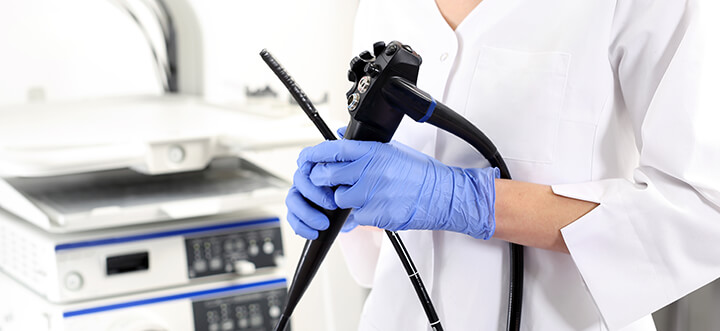
During a flexible sigmoidoscopy, a thin, flexible tube called a sigmoidoscope is inserted into the rectum. The sigmoidoscope has a tiny camera attached to the end, allowing your doctor to examine the lower portion of your colon.
Preparing for Flexible Sigmoidoscopy
For a successful flexible sigmoidoscopy, your rectum and sigmoid colon must be completely cleaned out. Your doctor will instruct you to consume only clear liquids leading up to the procedure and to take laxatives and/or enemas as directed. It is important to discuss any medical conditions you have with your doctor. In the days leading up to your flexible sigmoidoscopy, you will also follow the preparation instructions provided by your doctor.
What to expect during Flexible Sigmoidoscopy
A flexible sigmoidoscopy typically lasts between five and 15 minutes. This procedure generally causes minimal discomfort, so a sedative is not usually administered. During the exam, you will be instructed to lie on your side while your doctor gently inserts the sigmoidoscope into your rectum. The camera at the tip of the sigmoidoscope captures images as it moves through the lower portion of your colon, allowing your doctor to closely examine the area. If a polyp is detected during the exam, your doctor may recommend a full colonoscopy, as a flexible sigmoidoscopy can only examine the lower part of the colon.
After a flexible sigmoidoscopy, you may experience mild abdominal pain or cramping for a few hours, or you may notice a small amount of blood in your first bowel movement. Neither of these symptoms is typically a cause for alarm, and you should be able to return to your normal daily activities immediately after the procedure.